Produced to help promote the upcoming “Bruce Lee 75th Birthday Celebration” (Bruce Lee Night) San Francisco Giants vs New York Mets at AT&T Park in San Francisco on July 7, 2015. Giants pitcher Tim Lincecum interviews Bruce Lee about, well, pitching! The footage of Lee was taken from a 1971 television interview by Canadian Pierre Berton (from his self named show).
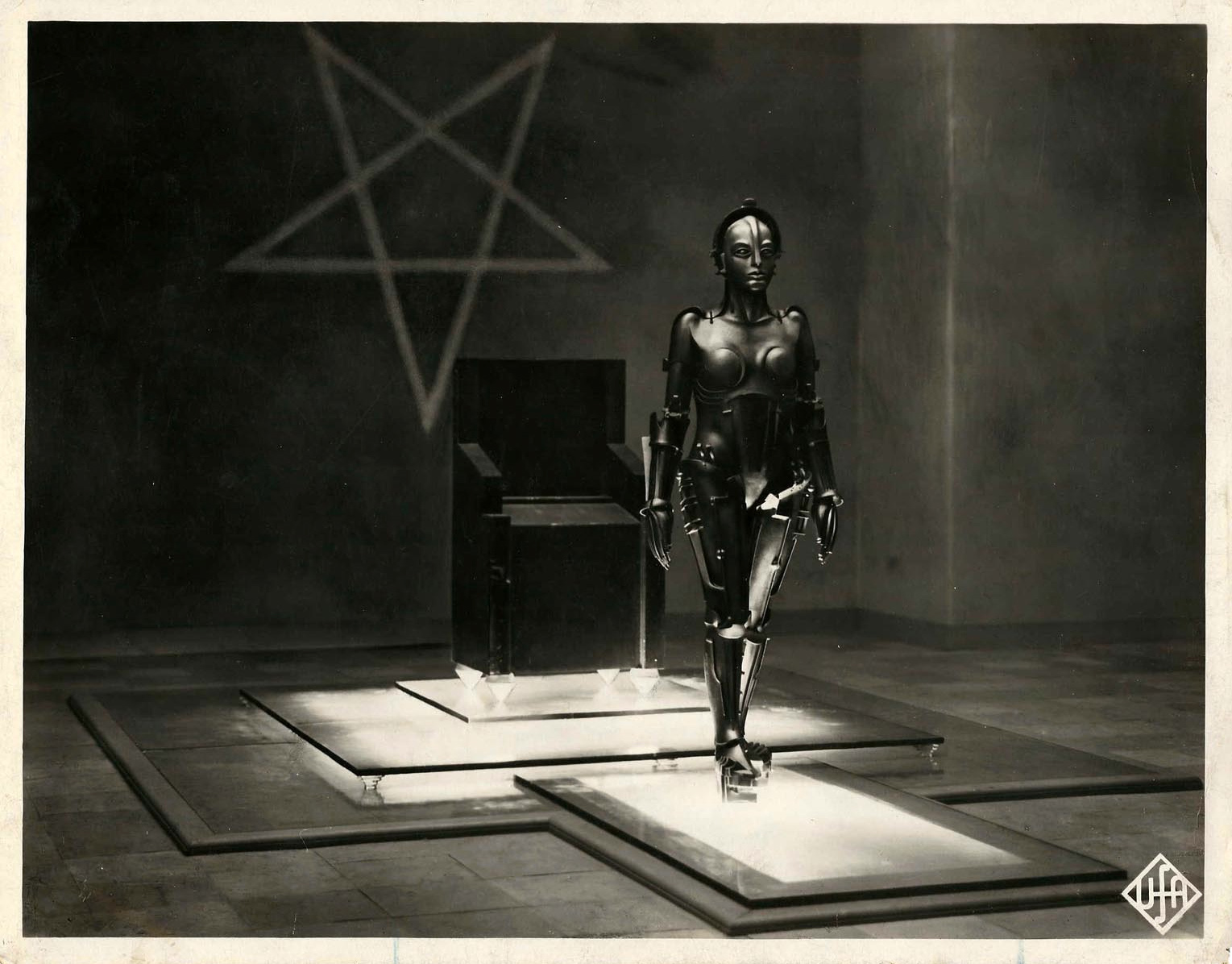
When I was a kid, there was only one Metropolis, and that was the city where Superman lived (I thought it was pronounced like “Metro-polis”). But then I stumbled upon a picture in a magazine from the 1927 Fritz Lang film Metropolis. It kinda confused me at first, because I thought this was the same place where Superman lived. In the film Metropolis, The Future looks pretty cool, that is, if you can afford it. Turns out: it’s a dystopian nightmare for everyone else. In the film, an inventor named Rotwang builds a female robot (a Machinenmensch!) as an expression of unrequited love for a former flame. Original stills and posters from this film are valuable, this one was selling for $24,000 (no, I did not purchase it). Here’s the scene where the Machinenmensh is brought to life by Rotwang, reminiscent of the laboratory scene from Frankenstein (which came out 4 years later in 1931):
Although Metropolis is known for its ground breaking special effects, which are numerous and wonderful, I really dig the ridiculously exaggerated over-the-top acting styles embraced by the performers in the film. Here’s a recent trailer celebrating the 2010 release of a newly restored “definitive” version of the film:
This guy named Tony has a YouTube Channel called Every Frame a Painting: “I like movies. I don’t take requests. Every Frame a Painting is dedicated to the analysis of film form. Pictures and sound all the way, baby.” Here’s his take on Akira Kurosawa, some great insights here, and if you are a Kurosawa fan, a great selection of clips from The Master.
Here is a posed publicity still from the original 1933 “King Kong”. King Kong and the Tyrannosaur are posed stop-motion puppets, perhaps 18″ tall. Foreground and background elements are painted. There is no scene exactly like this in the actual film, Kong never picks up a log, jamming it into the Tyrannosaur’s mouth, although maybe it would’ve been a good idea. For you collectors, click on the picture and you will get the full size version which you can copy.
I met Adam Beckett at CalArts (California Institute of the Arts) in 1971. He was a talented artist, animator and possessed an eccentric “larger than life” personality. His work was clearly influenced by 1960s & 1970s counter-culture and erotica. His output was prodigious considering his brief lifespan (1950-1979) and he was also legendary for his astonishing skills with the animation camera and optical printer, employing techniques which led many to believe he used a computer (which he absolutely did not). The Iota Center along with the Academy of Motion Picture Arts & Sciences have worked diligently to restore his significant works, which are available in DVD format. The main part of “Sausage City” (everything excluding the opening and ending credits) was created using 48 drawings, which were repeated as a loop. However, on each repetition, Beckett would add more detail to the drawings, so that you can actually see the complex loop evolve. Given the elaborate detail of the drawings, many days, weeks, months (who knows?) were required to complete the cycle, along with many trips to the animation camera, all while holding off on processing the film until completion. At least, this is what I remember Beckett telling me!
I had never seen this interview, but it’s fascinating to see Welles here in 1960 (age 45), well photographed (in black & white), lots of expression in his face to watch. He talks about various topics … authors, Shakespeare, his famous voice, Gregg Toland, Citizen Kane, Art, Life, etc. Many were frustrated that his film work after Citizen Kane seemed fragmented by comparison, but look what he accomplished beyond film, in the theatre (he was one of the great Shakespearean actors) and radio (he panicked a nation with his War of the Worlds broadcast in 1938). He was truly larger than life, and as charismatic and complex as the characters he portrayed.
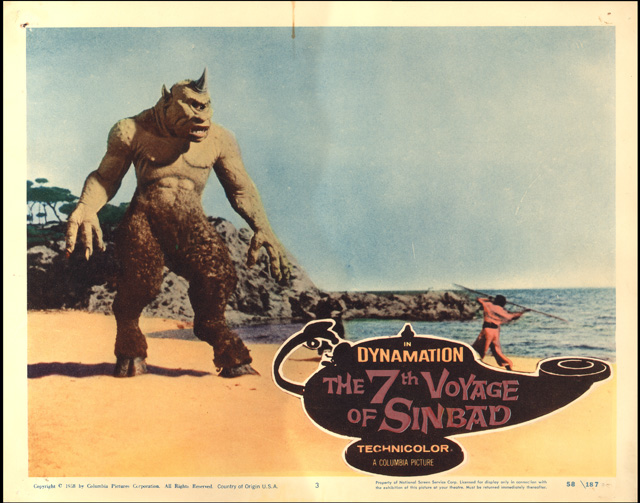
Ray Harryhausen, the great stop-motion animator and inspiration for many of today’s Special Effects Gurus passed away today at the age of 92. I remember seeing The 7th Voyage of Sinbad at age 8 and it made quite an impression. He was the first special effects artist I could actually name (it helped that he had an unusual name), and (I later learned) many of his films were scripted around his astounding animated creatures and concepts. Unlike today’s Special Effects Extravaganzas, requiring armies of animators and effects technicians, Harryhausen supposedly did most of the animation himself.
I got to meet Mr. Harryhausen in 1982 when he took a tour of I.L.M. and I got to show him around the Optical Department. I managed to secure his autograph on a Lobby Card from It Came From Beneath the Sea (which has faded somewhat since I had it framed and displayed).
My Mom traveled to Los Angeles with her Mother & Father in the Summer of 1934. They visited the Universal Studio lot and my Mom carried her autograph book with her (I guess this was a common thing back then, to have an autograph book). She got 4 autographs while at Universal Studios: Edward McWade (actor), Neil Hamilton (actor, appeared in several Tarzan movies), Franklin Pangborn (comedic actor, appeared in many Preston Sturges movies) and lastly Boris Karloff.
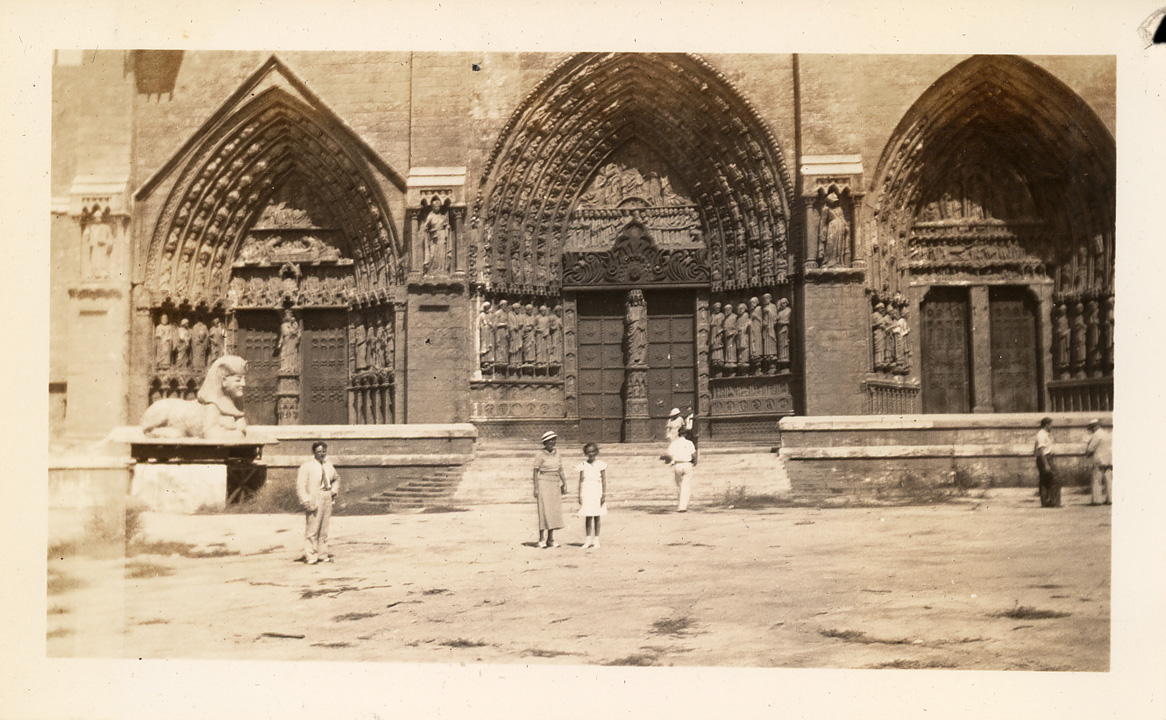
Below is a picture of my Mother and my Grandmother in front of the Notre Dame set from The Hunchback of Notre Dame.

 I met Adam Beckett at CalArts (California Institute of the Arts) in 1971. He was a talented artist, animator and possessed an eccentric “larger than life” personality. His work was clearly influenced by 1960s & 1970s counter-culture and erotica. His output was prodigious considering his brief lifespan (1950-1979) and he was also legendary for his astonishing skills with the animation camera and optical printer, employing techniques which led many to believe he used a computer (which he absolutely did not).


 Lapsed Time Images